
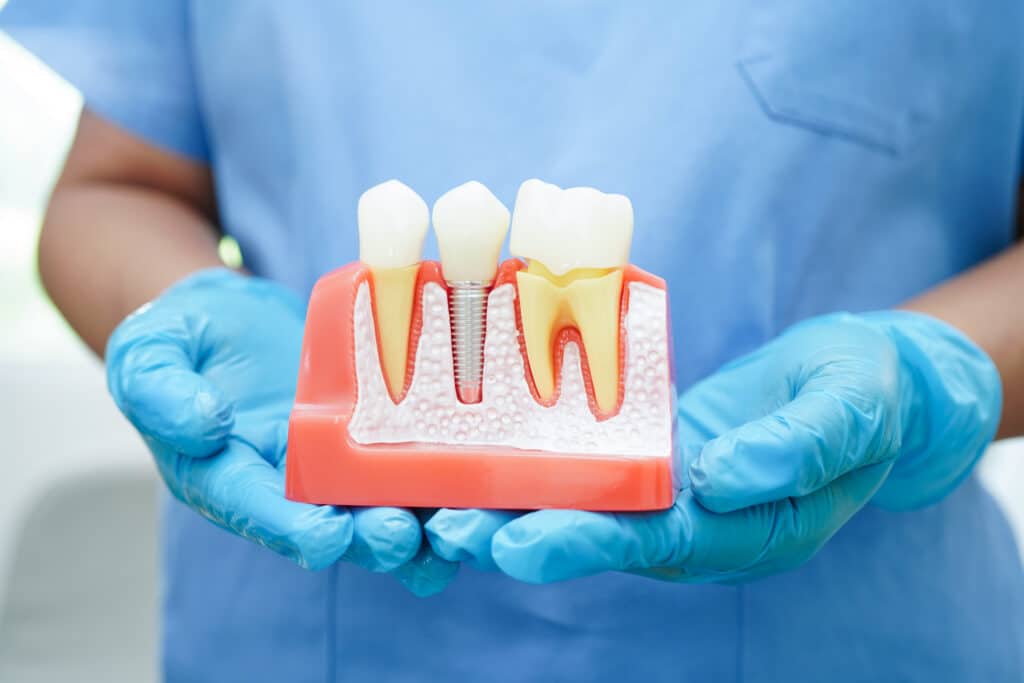
Dental implants abroad cost $850 to $900 per tooth in Mexico and Costa Rica, compared with a US average of around $3,500, so most patients still save more than half after paying for flights and a hotel. That gap is why so many Americans and Canadians now travel for implant surgery.
This page covers what those savings actually look like, which destinations are worth considering, what safety questions to ask before you book, and how to plan the trip itself.
What dental implants abroad actually cost
The single biggest variable is how many implants you need. A single tooth replacement is a very different financial calculation from a full-arch restoration, and the savings scale with the size of the case. The US average for a single implant with abutment and crown sits around $3,500. For a full arch using the All-on-4 approach, the US average is roughly $25,000.
At clinics in Mexico and Costa Rica that work with international patients, prices look very different. The table below uses MedEscape’s own price ranges. Because each clinic sets its own fees, the abroad column shows a starting range rather than a fixed quote. For a full breakdown across all dental procedures, see the MedEscape treatment cost comparison table.
| Procedure | Abroad (starting range) | US average |
|---|---|---|
| Dental implant (per tooth) | $850 to $900 | $3,500 |
| Dental crown (per tooth) | $500 to $580 | $1,350 |
| Porcelain veneer (per tooth) | $550 to $575 | $2,200 |
| All-on-4 full arch restoration | About $12,000 | $25,000 |
| Root canal (per tooth) | $415 to $450 | $1,150 |
| Tissue grafting (per quadrant) | $1,500 to $1,800 | $3,500 |
The cost comparison looks even more dramatic for full-mouth cases. A patient who needs eight implants and a full set of crowns could be looking at $28,000 or more in the US. The same treatment plan at a clinic in Costa Rica or Mexico could come in well under $15,000, leaving room for round-trip airfare, a week’s accommodation, and still ending up ahead by thousands of dollars.
A few costs that get overlooked in early budgeting: bone grafts or sinus lifts (needed when jaw density is low), a second trip if your case requires a healing interval between implant placement and final crowns, and travel insurance that covers dental complications. Build those in before you compare totals.
Best destinations for dental implants abroad
For US and Canadian patients, Mexico and Costa Rica are the two destinations that make the most practical sense. Both have mature dental tourism infrastructure, English-speaking clinicians, and short travel times from most North American cities.
Mexico is the most popular choice by volume, and the reasons are straightforward. Border cities like Los Algodones, Tijuana, and Nuevo Laredo are drivable from much of the American Southwest and West. For patients who need staged treatment across two trips, the short travel time makes returning for final restorations much easier to schedule around work and family. Clinics in larger cities like Guadalajara and Monterrey handle more complex full-arch cases and tend to have in-house CT imaging and dental labs.
Costa Rica draws patients who want to combine treatment with a longer stay. Clinics in and around San Jose have strong track records with implant and restorative work, and many have been serving North American patients for 15 or more years. English is widely spoken in tourist-facing businesses, and the country has a stable healthcare regulatory environment.
Panama is a third option for patients on the East Coast or in the Southeast, where direct flights to Panama City can be quicker than flying to Mexico. The dental tourism sector there is smaller but growing.
Patients sometimes ask about dental destinations in Europe and Asia. For North Americans, those trips rarely pencil out as well as Mexico or Costa Rica once you factor in long flights, a second trip for the final crowns, and the distance from your clinic if something needs attention.
What matters more than the country is the individual clinic and the dentist’s specific training in implant surgery. National borders do not determine outcomes. A poorly run clinic in any country carries more risk than a well-run one, regardless of geography.
Are dental implants abroad safe?
Yes, when the clinic and the clinician meet a reasonable standard of care. Safety depends on the specific provider, not the country.
The FDA notes that risks associated with dental implant systems include infection in the bone or gums, implant loosening or failure, nerve or sinus complications depending on implant position, and delayed healing in patients who smoke or have conditions like uncontrolled diabetes. Those risks exist in any country. They are higher when infection control is inconsistent, sterilization is inadequate, or the surgeon lacks specialized training.
Dental implant surgery is technique-sensitive. Placing implants correctly requires postgraduate training beyond general dental school, typically in oral surgery, periodontics, or prosthodontics. Before booking anywhere, ask the clinic directly about the implant surgeon’s specialty training, how many implant cases they complete per year, and which implant systems they use. Brands like Straumann, Nobel Biocare, and Zimmer Biomet are CE-marked and FDA-cleared and have long track records. Implants from those manufacturers are also serviceable by dentists at home if you ever need future maintenance or repair.
Accreditation is worth checking. Most dental clinics are not hospital-accredited, but some high-volume international centers hold Joint Commission International (JCI) accreditation for ambulatory dental care, or ISO 9001 certification for quality management. Those credentials mean the clinic has had its processes reviewed by an outside body. They are not a guarantee of a perfect outcome, but they are a meaningful signal.
One practical safety consideration that often gets skipped: ask the clinic what happens if there is a complication after you go home. A reputable clinic should have a clear policy, whether that is a remote consultation, a revision warranty, or a documented protocol for coordinating with your dentist at home.
How to choose a dental clinic abroad
Choosing the right clinic is where most of the safety risk gets managed or ignored.
Ask for the implant surgeon’s credentials specifically, not just the general practice information. You want to know their specialty degree, where they trained, how long they have been placing implants, and roughly how many cases they handle per year. A surgeon who places 200 implants a year has a very different skill base from a general dentist who does it occasionally.
Find out which implant brand they use and confirm it is CE-marked or FDA-cleared. Ask whether the components are genuine manufacturer parts. Counterfeit or unbranded implant hardware exists in some markets and creates problems down the line when local dentists cannot source compatible abutments or replacement parts.
Request a written treatment plan before you pay anything. It should include the number of implants, whether bone grafting is expected, a sequence of appointments, an estimate of how long each phase takes, and a line-item cost breakdown. If a clinic is unwilling to produce that before you commit, that tells you something.
Read reviews with some skepticism but do read them. Look for patterns rather than individual five-star endorsements. How does the clinic handle complaints? Do they respond to critical reviews at all? Ask the clinic for anonymized before-and-after photos of cases similar to yours.
Finally, plan your follow-up before you leave home. Bring back a copy of your operative notes, implant specifications, and post-treatment X-rays. Some US dentists are cautious about managing complications from work done abroad, so having thorough documentation makes that conversation much easier.
MedEscape connects US and Canadian patients with dental clinics in Mexico and Costa Rica that have been reviewed for licensing, documented experience, and pricing transparency. For more detail, see our guides to full mouth restoration abroad and how to check a dental clinic before you book.
Planning your dental implant trip
Most implant cases follow a two-trip structure. The first trip covers the surgical placement of the implant and any bone grafting. Then there is a healing interval, typically three to six months, while the implant fuses with the jawbone in a process called osseointegration. The second trip is for the final abutment and crown. Some clinics offer same-day or immediate-load protocols for straightforward cases, but that is not the right approach for everyone.
Before your first trip, share recent X-rays or a 3D cone-beam CT scan with the clinic for remote review. Most established clinics that work with international patients handle this routinely. A virtual consultation lets the dentist assess whether you are a good candidate and flag anything that would change the treatment plan or timeline before you book flights.
After surgery, plan to stay near the clinic for at least a few days. You will have swelling, some discomfort, and dietary restrictions to soft foods. Avoid planning intensive travel or excursions right after the procedure. Most patients fly home four to seven days after implant placement without issues, but ask the clinic specifically about their recommendation based on your case.
When you get home, share your operative report, implant specifications, and post-op X-rays with your regular dentist. Schedule a check-in appointment. Even if your dentist was not involved in the surgery, having a local provider monitoring your healing is sensible, and it puts documentation in your home dental record.
Frequently asked questions
How much do dental implants abroad cost compared to the US?
At clinics in Mexico and Costa Rica, dental implants start at $850 to $900 per tooth. The US average is around $3,500 per tooth. For a full arch using the All-on-4 approach, the abroad starting price is about $12,000 compared with a US average of roughly $25,000. See the full MedEscape cost comparison table for a complete breakdown.
What is the best country for affordable dental implants?
For US and Canadian patients, Mexico and Costa Rica are the most practical choices. Mexico has the advantage of proximity and drivable access from the Southwest, which matters a lot if your case requires two trips. Costa Rica attracts patients who want a longer stay and has a strong track record with complex restorative cases. Panama is worth considering if you are on the East Coast. What matters more than the country is the specific clinic and surgeon you choose.
Are dental implants done abroad as safe as in the US?
They can be, when the clinic meets a reasonable standard of infection control, the surgeon has proper specialty training in implant dentistry, and recognized implant brands are used. The FDA lists infection, implant failure, nerve complications, and delayed healing as the main risks of implant surgery, and those risks exist anywhere. They are higher at clinics that cut corners on sterilization or use unbranded implant hardware. Checking credentials, asking about accreditation, and confirming the implant brand before you commit reduces that risk significantly.
How many trips do I need for dental implants abroad?
Most cases need two trips. The first is for implant placement, sometimes with bone grafting if needed. Then you wait three to six months for the implant to fuse with the jawbone before returning for the final crown. Some clinics offer immediate-load or same-day protocols for suitable candidates, but that is not right for every patient. Discuss the timeline with the clinic during your remote consultation before booking anything.
What should I bring home after dental implant surgery abroad?
Ask the clinic for a copy of your operative notes, the implant brand and model number, the abutment specifications, and post-treatment X-rays. That documentation lets your dentist at home monitor your implant properly and source compatible parts if you ever need maintenance or a replacement crown in the future. Without it, managing any follow-up care becomes harder than it needs to be.